.webp)
Case Study: A Nerve Stuck Between the Roots
Wisdom tooth removal is one of the most common oral surgery procedures, but not all extractions are equal. When roots sit close to or wrap around the inferior alveolar nerve, the risk profile changes significantly, and so does the planning required. This case study outlines how careful pre-operative assessment and advanced imaging enabled the safe removal of two high-risk lower wisdom teeth with full nerve preservation and an uncomplicated recovery.
A 41 year old female patient recently presented with pain associated with her lower wisdom teeth, 38 and 48, along with recurrent infections involving tooth 38.
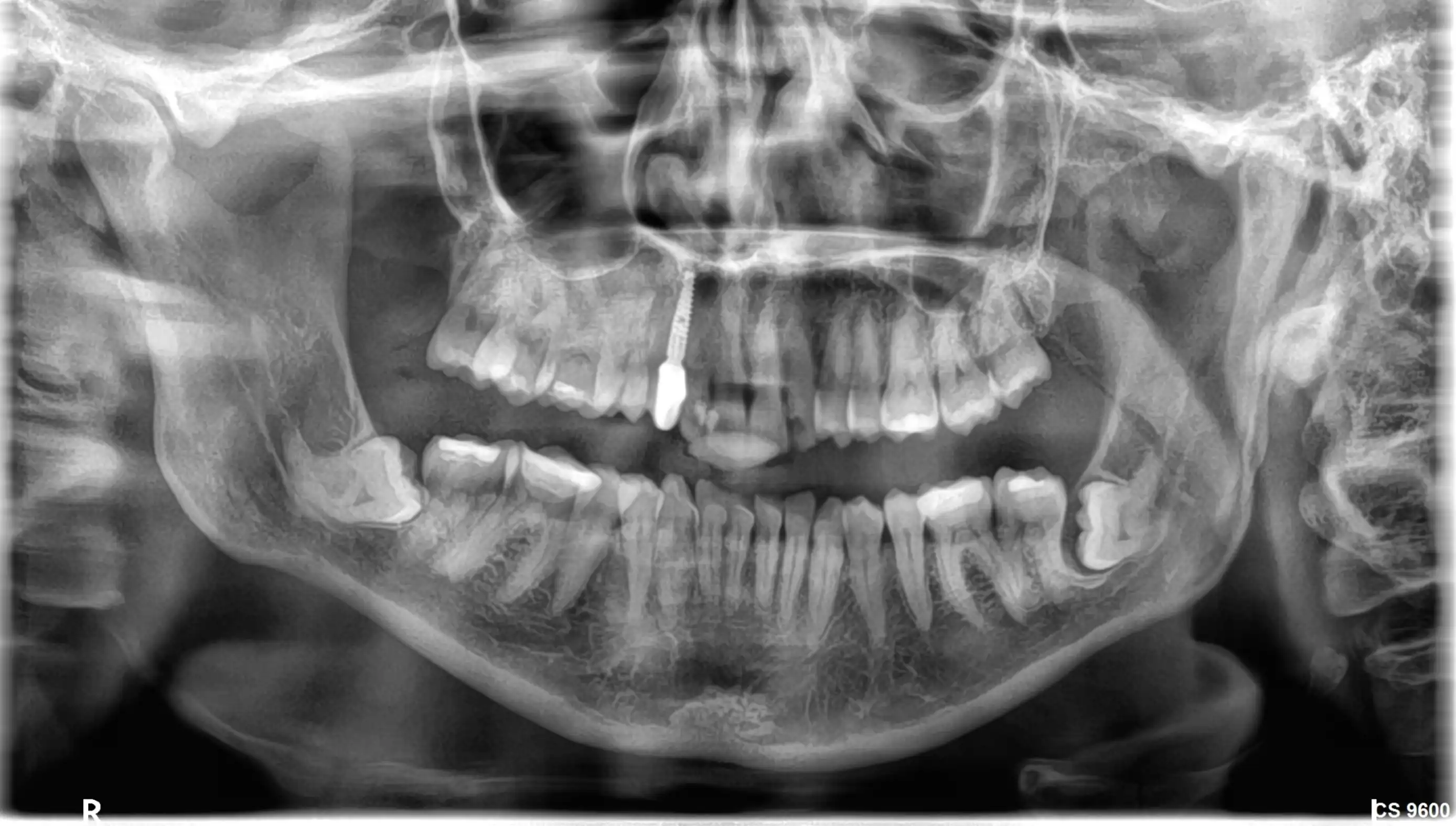
Pre-operative imaging
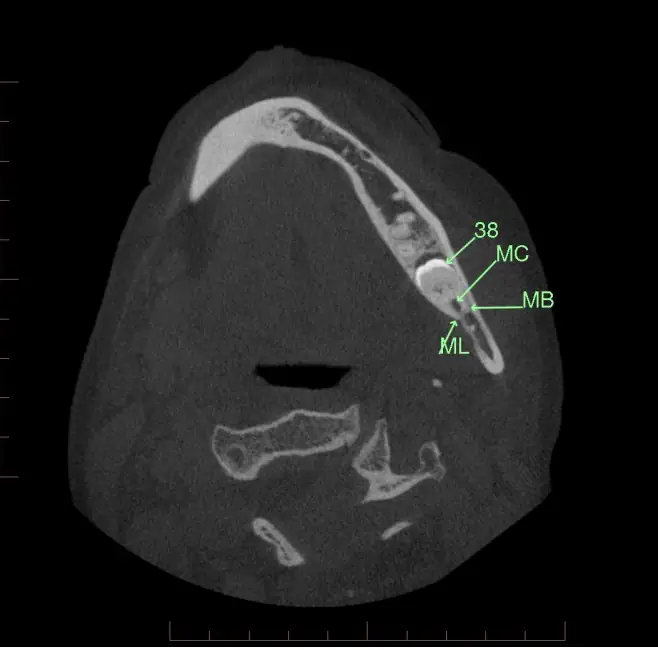
Clinical and radiographic assessment deemed these extractions would be particularly challenging due to the close proximity of the root systems to the inferior alveolar nerve. Given the complexity of the case, a standard OPG X-ray was not sufficient to fully map the anatomical relationship between the roots and the nerve. A pre-operative Cone Beam CT (CBCT) scan was essential to accurately assess the anatomical relationship prior to surgery.
The CBCT demonstrated partial nerve entrapment associated with the root system of 38, highlighting the increased risk of inferior alveolar nerve injury. This finding confirmed the surgical approach and risk profile for the procedure.
Surgical Outcome
The patient subsequently underwent surgery under general anaesthetic. Both 38 and 48 were removed safely, with preservation of the inferior alveolar nerve and an uncomplicated post-operative recovery.
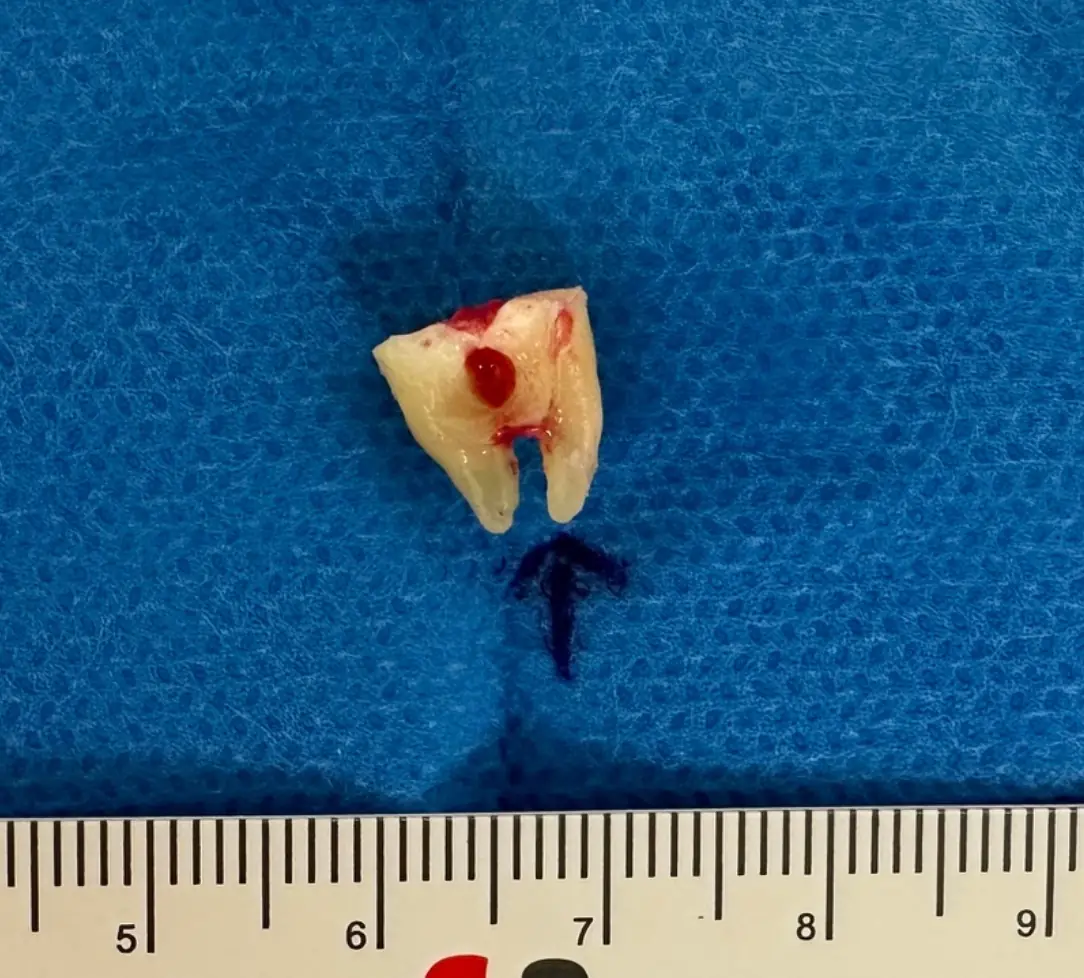
Cases such as this reinforce the importance of careful pre-operative planning and appropriate imaging when managing high risk third molars. In situations where there is intimate nerve involvement, CBCT imaging is invaluable in reducing surgical risk and improving patient outcomes.
When to refer wisdom tooth cases
Complex wisdom tooth extractions are best managed by an experienced Oral & Maxillofacial Surgeon in a hospital setting under general anaesthetic.
Referral to an Oral & Maxillofacial Surgeon is worth considering when any of the following are present:
- OPG findings suggest close or intimate nerve contact
- The patient has systemic health considerations that increase anaesthetic or bleeding risk
- There is a history of recurrent pericoronitis or failed previous extraction attempts
- Patient anatomy or tooth position makes access particularly difficult
- The patient has significant dental anxiety that warrants sedation or general anaesthetic
I am always happy to assist with wisdom tooth referrals, particularly complex or high-risk cases where advanced imaging and surgical management may be required.
.webp)